Why Dependency Trackers Fall Short: The Case for Active SBOM Security
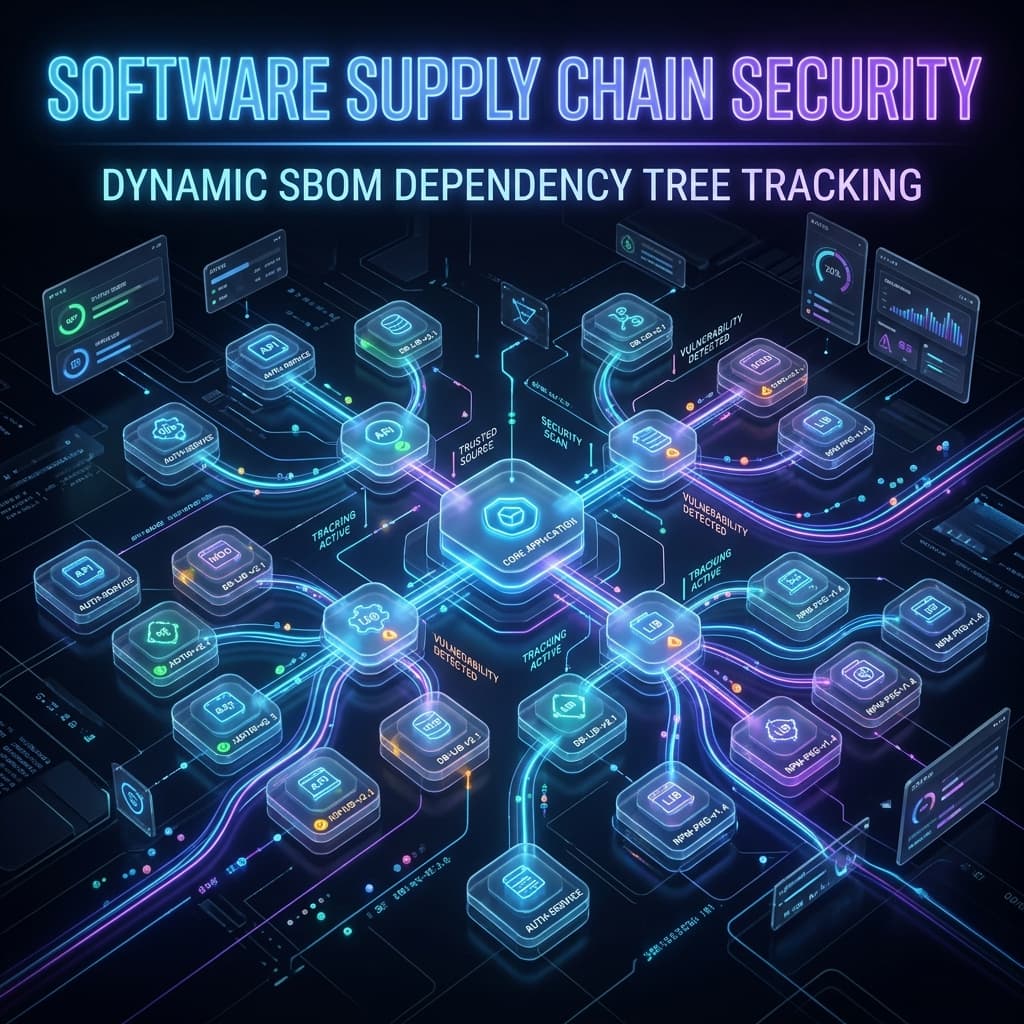
Modern software is built like Lego blocks—nearly 80% of a modern application's codebase is composed of open-source libraries and third-party dependencies.
While this speed is incredible for development, it opens a massive backdoor for attackers. Many developers think, "We use basic dependency checkers (like npm audit, Dependabot, or pip-audit), so we are secure."
Unfortunately, standard dependency trackers are leaving critical gaps in your security perimeter. Here is why basic scanners fall short, and why your team needs Active Software Bill of Materials (SBOM) Security.
1. The Invisible Threat of Nested (Transitive) Dependencies
A basic dependency tracker scans your primary package.json or requirements.txt to find direct imports. But what about the libraries that those libraries import?
A typical project has around 30 direct dependencies, but often contains over 1,000 nested (transitive) dependencies. Standard trackers:
- Struggle to accurately trace deep, multi-layered dependencies.
- Fail to map out how a vulnerability in a 4th-tier library affects your top-level application.
- Do not give you a clean, exportable standard ledger (like CycloneDX or SPDX) that enterprise clients demand before signing contracts.
2. Point-in-Time Audits vs. Continuous supply chain mapping
Security trackers only run when you trigger a build or commit code. If a zero-day vulnerability (like Log4j or XZ Utils) is disclosed tomorrow:
- The Static Tracker Gap: You won't know you are vulnerable until your next pull request or manual CLI command.
- The Active SBOM Solution: An active SBOM registry acts as a dynamic inventory. The moment a new CVE is announced, it instantly flags the package inside your running registry, alerting your team in real-time through Slack or Discord webhooks.
3. Compliance Framework blindspots
Regulatory compliances (like DPDP 2023, GDPR, HIPAA, and ISO 27001) now enforce strict accountability over third-party data processing. Basic scanners find security bugs, but they cannot verify license compliance. If a developer accidentally imports a library with a restrictive copyleft license (like GPL), your proprietary product could face legal exposure.
An Enterprise SBOM pipeline automatically tracks, monitors, and filters licenses against your allowed compliance compliance targets.
🌟 How VAPT Insights Reinvents SBOM Tracking
Rather than parsing JSON logs on-the-fly and slowing down your builds, VAPT Insights introduces a Registry-First SBOM Engine:
- CycloneDX & SPDX Ingestion: Import standard SBOM payloads directly from your CI/CD pipelines (via GitHub Actions, Trivy, etc.).
- Decoupled Inventory Matching: Tracks live packages in a dedicated, scalable component registry without polluting scanning tables.
- Real-time Alerting Pipelines: Delivers instant, actionable Slack, Discord, and email alerts the second a supply chain vulnerability is discovered.
Protect your supply chain—don't just track direct imports.
**Get Started with Active SBOM Monitoring on VAPT Insights**